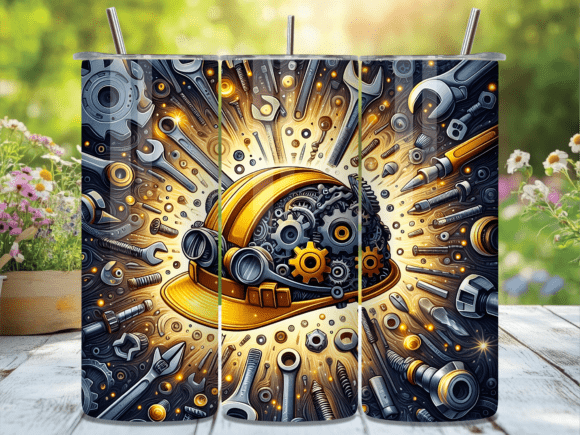
Reviewing the Hat Tools Gear Mechanic Wrap Design
As a designer who has spent countless hours staring at digitizing software and even more time watching needles punch through fabric, I have learned that not every graphic translates well into thread. When I first pulled up the Hat Tools Gear Mechanic Tumbler Wrap file on my screen, my initial reaction was one of cautious optimism. The theme is distinct—industrial, rugged, and masculine—which immediately narrows the target audience but also creates a strong niche appeal. For those of us running small shops or selling on platforms like Etsy, finding designs that speak directly to a specific customer persona is half the battle.
The visual personality of this design leans heavily into the mechanic aesthetic. It features gear motifs and tool elements arranged in a layout that suggests movement and precision. From a pure graphic design standpoint, it works. But as an embroidery product reviewer, I need to know how it behaves under the needle. Does it hold up on textured fabrics? Will the fine lines of the gears turn into a messy blob after ten washes? Let’s dig into the practical realities of using this machine embroidery design in real-world projects.
First Impressions and Visual Mood
The mood created by the Hat Tools Gear Mechanic Tumbler Wrap is undeniably utilitarian yet stylish. It avoids the cartoonish look that plagues many themed designs, opting instead for a cleaner, more professional silhouette. This is crucial because it allows the design to be used on higher-end items without looking cheap. The layout appears balanced, with a central focus that draws the eye, surrounded by supporting elements that add depth without overwhelming the main subject.
For embroidery designers, the distinction between a simple print and a stitched piece is detail management. In this design, the interplay between what would likely be satin stitch borders and fill stitch interiors is key. If the digitizer has done their job correctly, the transition between these stitch types should be smooth, preventing thread breaks and ensuring a polished finish. The visual appeal here relies on contrast; the metallic implication of gears needs to pop against the fabric background, whether that is a dark navy sweatshirt or a khaki tote bag.
Real-World Application: Beyond the Tumbler
While the product title specifies "Tumbler Wraps," which typically refers to sublimation or vinyl applications for drinkware, we need to think creatively about how this embroidery file can be adapted for stitched goods. As a craft business owner, I am always looking for versatility. This design screams "custom apparel" for the trades. Imagine this stitched onto the left chest of a heavy-duty work shirt or the back of a denim jacket. It serves as a badge of pride for mechanics, engineers, and DIY enthusiasts.
I recently considered a scenario where a client wanted personalized gifts for a group of apprentices finishing their training. A standard certificate is forgettable, but a high-quality embroidered patch featuring this gear motif? That gets kept. By scaling the design down, it could work beautifully as a patch sewn onto tool bags or aprons. The rugged nature of the theme pairs perfectly with canvas or duck cloth, fabrics that can handle the stitch density required to make the gears look solid and substantial.
Furthermore, for holiday embroidery or Father’s Day promotions, this design fits seamlessly into gift guides. It is not just a generic tool image; it has a specific mechanical elegance that elevates it above clip-art quality. Whether used for a tote bag design for a hardware store promo or as a standout element on a sweatshirt embroidery project, the thematic consistency helps build brand recognition for shops targeting the male demographic or industrial sectors.
Technical Considerations and Fabric Choices
Here is where experience matters. You cannot simply drop any design onto any fabric and expect perfection. The Hat Tools Gear Mechanic Tumbler Wrap likely contains intricate details, particularly in the teeth of the gears and the handles of the tools. These areas are vulnerable. If you attempt to stitch this on a thin, stretchy fabric like a lightweight jersey t-shirt without proper support, you will face puckering and distortion. The fabric texture plays a massive role in the final outcome.
For best results, I recommend using this design on stable, medium-to-heavy weight materials. Denim, canvas, twill, and fleece are ideal candidates. These fabrics provide a solid foundation for the stitches, allowing the thread colors to sit on top rather than sinking in. If you are working with dark fabric, ensure your digitizing includes underlay stitches to prevent the background color from peeking through the fill areas. Conversely, on light fabrics, you must check for shadowing, where the dense stitching might create a visible outline on the reverse side.
Curved surfaces present another challenge. If you are adapting this for a cap or a curved pocket, the hoop size and stabilization become critical. A large, dense design on a curved surface can cause the fabric to pull away from the hoop, leading to misalignment. Always use a cut-away stabilizer for garments that will be washed frequently, as tear-away stabilizers may leave residue or fail to support the weight of the embroidery over time.
Enhancing Product Value and Customer Trust
Why does this matter for your bottom line? Because quality builds trust. When a customer buys a handmade product, they are buying into the craftsmanship. A poorly executed embroidery job with loose threads or distorted shapes signals low value. However, a crisp, well-stitched version of the Hat Tools Gear Mechanic Tumbler Wrap signals professionalism. It tells the buyer that you care about the details.
This attention to detail enhances the finished product's perceived value. It transforms a simple item into a personalized gift that feels bespoke. For Etsy sellers and small shop owners, this differentiation is vital. In a sea of mass-produced goods, a well-executed embroidery project stands out. It encourages buyer engagement and repeat business because the customer knows they are getting something durable and visually striking.
Practical Designer Notes for Success
Before you list this as a digital embroidery file or start stitching it for clients, take these practical steps:
- Test on Scrap Fabric: Never run a new design on your final product first. Use a scrap piece of the same material to check for tension issues and registration.
- Check Thread Contrast: Ensure your thread colors contrast sufficiently with the fabric. Metallic threads can add a nice touch for gears but require careful handling to avoid breakage.
- Review Stitch Density: If the design feels too stiff after stitching, the density may be too high. Adjust if possible, or choose a lighter fabric weight to balance it out.
- Confirm Hoop Size: Verify that the design fits within your machine’s maximum hoop size. If it is a wrap design, it might be wide, requiring a large hoop or a multi-position technique.
- Inspect Small Details: Zoom in on the digitized file. Are the tiny lines in the tools too thin? They might need to be converted to satin stitch or removed to prevent thread nests.
- Licensing Check: Always confirm the license terms. Can you sell finished items? Can you resell the digital file? Clarify this before investing time in marketing.
In conclusion, the Hat Tools Gear Mechanic Tumbler Wrap offers a strong visual narrative for the right audience. It is not a one-size-fits-all solution, but for those targeting the industrial, mechanic, or DIY markets, it is a valuable asset. By respecting the technical requirements of embroidery and choosing the right materials, you can turn this design into a profitable and professional addition to your craft business portfolio. Treat it with the respect it deserves, and it will deliver results that satisfy both you and your customers.